得益于Go语言的精简语法和对并发控制的良好支持,我们可以迅速总结出高效而优雅的常用并发代码范式。
for-select模式 我们可以循环监听多个channel的消息实现多路复用,我们也可以使用for...range遍历
1
2
3
4
5
6
7
8
9
10
11
12
13
14
15
16
17
18
19
20
21
22
23
24
25
26
27
28
29
30
31
32
33
34
35
36
37
38
39
40
41
42
43
44
45
46
47
48
49
50
51
52
53
54
55
56
57
58
59
60
func normal_task (idx int ) fmt.Printf("normal_task(%d)\n" , idx) } func select_pattern (ctx context.Context) cnt := 0 for { select { case <-ctx.Done(): fmt.Printf("done\n" ) return default : cnt++ cnt %= 100 normal_task(cnt) time.Sleep(1 * time.Second) } } } func select_range_pattern (ctx context.Context, arr []int ) for _, v := range arr { select { case <-ctx.Done(): fmt.Printf("done\n" ) return default : normal_task(v) time.Sleep(1 * time.Second) } } fmt.Printf("select_range_pattern finished\n" ) } func main () ctx, cancel := context.WithCancel(context.Background()) wg := sync.WaitGroup{} wg.Add(1 ) go func () defer wg.Done() select_pattern(ctx) }() time.Sleep(10 * time.Second) cancel() wg.Wait() fmt.Println("-------stage2------------" ) wg = sync.WaitGroup{} wg.Add(1 ) ctx, cancel = context.WithCancel(context.Background()) go func () defer wg.Done() select_range_pattern(ctx, []int {1 , 2 , 3 , 4 , 5 }) }() time.Sleep(10 * time.Second) cancel() wg.Wait() }
select-timeout模式 我们可以利用time.After给select的监听设置超时时间
1
2
3
4
5
6
7
8
9
10
11
12
13
14
15
16
17
18
19
20
21
22
23
24
25
26
27
28
29
30
31
func time_pattern (ctx context.Context, ch chan int ) select { case <-ctx.Done(): fmt.Printf("canceled\n" ) return case a := <-ch: fmt.Printf("recv msg: %d\n" , a) return case <-time.After(2 * time.Second): fmt.Printf("timeout 2s\n" ) return } } func main () wg = sync.WaitGroup{} wg.Add(1 ) ctx, cancel = context.WithCancel(context.Background()) ch := make (chan int ) go func () fmt.Println("发起了一个请求:" ) time.Sleep(5 * time.Second) ch <- 666 }() go func () defer wg.Done() time_pattern(ctx, ch) }() wg.Wait() }
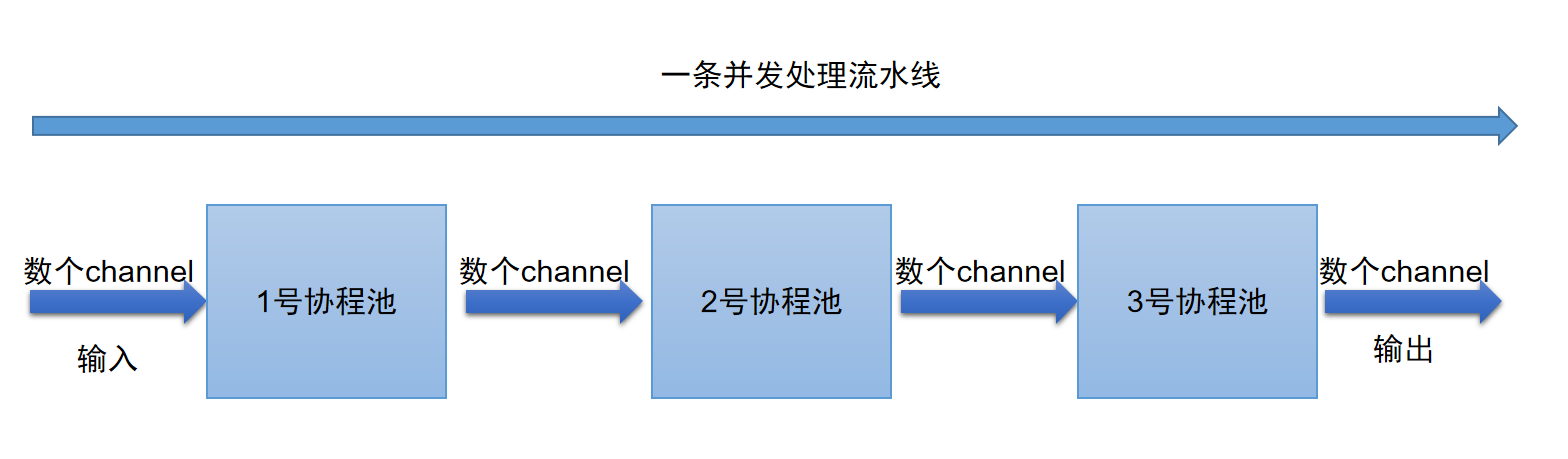
pipeline模式 流水线模式或者说管线模式,让多个协程通过管道串联起来分步骤依次处理任务
下面是一种实现方式(把协程池简化为单个协程了
总体流程就是主协程
1
2
3
4
5
6
7
8
9
10
11
12
13
14
15
16
17
18
19
20
21
22
23
24
25
26
27
28
29
30
31
32
33
34
35
36
37
38
39
40
41
42
43
44
45
46
47
48
49
50
51
52
53
54
55
56
57
58
59
60
61
62
63
64
65
66
67
68
69
70
71
72
73
74
75
76
77
78
79
80
81
82
83
84
85
86
87
88
89
90
91
92
93
94
95
96
97
98
99
100
101
102
103
104
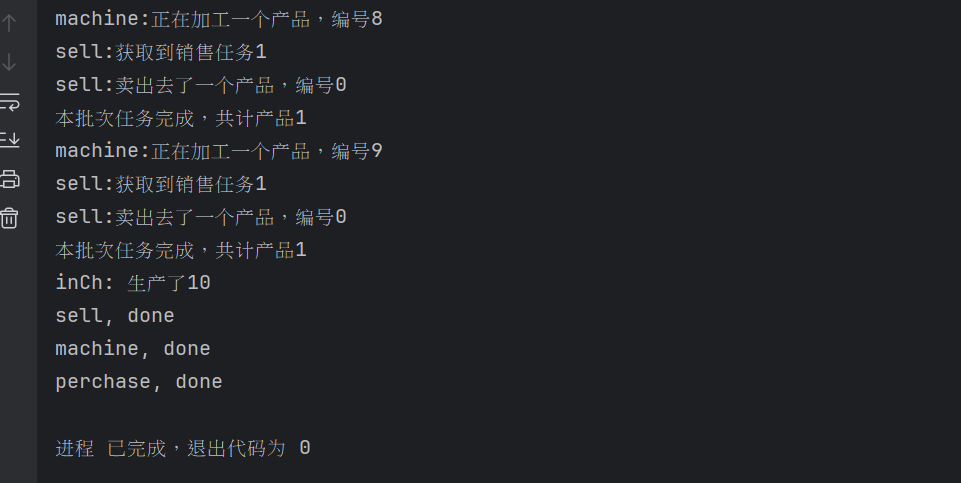
func perchase (ctx context.Context, inCh <-chan int , outCh chan int ) defer fmt.Printf("perchase, done\n" ) defer close (outCh) for { select { case <-ctx.Done(): return case num, ok := <-inCh: if !ok { return } fmt.Printf("inCh: 采购了%d\n" , num) select { case <-ctx.Done(): return case outCh <- num: } } } } func machine (ctx context.Context, inCh <-chan int , outCh chan int ) defer fmt.Printf("machine, done\n" ) defer close (outCh) for { select { case <-ctx.Done(): return case num := <-inCh: fmt.Printf("machine:收到加工任务%d\n" , num) for i := 0 ; i < num; i++ { fmt.Printf("machine:正在加工一个产品,编号%d\n" , i) select { case <-ctx.Done(): return case outCh <- 1 : } time.Sleep(1 * time.Second) } fmt.Printf("inCh: 生产了%d\n" , num) } } } func sell (ctx context.Context, inCh <-chan int ) defer fmt.Printf("sell, done\n" ) for { select { case <-ctx.Done(): return case num := <-inCh: fmt.Printf("sell:获取到销售任务%d\n" , num) for i := 0 ; i < num; i++ { fmt.Printf("sell:卖出去了一个产品,编号%d\n" , i) time.Sleep(1 * time.Second) } fmt.Printf("本批次任务完成,共计产品%d\n" , num) } } } func test_pipeline () fmt.Println("----------- test pipeline --------------\n" ) inPerchaseCh := make (chan int ) outPerchaseCh := make (chan int ) outMachineCh := make (chan int ) ctx, cancel := context.WithCancel(context.Background()) wg := &sync.WaitGroup{} wg.Add(3 ) go func () defer wg.Done() perchase(ctx, inPerchaseCh, outPerchaseCh) }() go func () defer wg.Done() machine(ctx, outPerchaseCh, outMachineCh) }() go func () defer wg.Done() sell(ctx, outMachineCh) }() inPerchaseCh <- 10 time.Sleep(5 * time.Second) time.Sleep(20 * time.Second) close (inPerchaseCh) cancel() cancel() cancel() wg.Wait() }
分配问题 因为管线可以存在一对多,多对多和多对一的情况,因此要引入扇入和扇出结构
其中一对多比较好实现,我们来着重介绍一下实现扇出的组件merge
1
2
3
4
5
6
7
8
9
10
11
12
13
14
15
16
17
18
19
20
21
22
23
func merge (ins ...<-chan int ) chan int { out := make (chan int ) wg := sync.WaitGroup{} ch_merge := func (c <-chan int ) defer wg.Done() for n := range c { out <- n } } wg.Add(len (ins)) for _, in := range ins { go ch_merge(in) } go func () wg.Wait() close (out) }() return out }
这样通过扇出和扇入模式,整条流水线就被扩充好了,大大提升了生产效率。因为已经有了通用的扇入组件 merge,所以整条流水中任何需要扇出、扇入提高性能的工序,都可以复用 merge 组件做扇入,并且不用做任何修改。
future模式 喜闻乐见异步编程,我们利用goroutine和channel实现异步编程,让不相干的步骤能够并发执行,下面是执行流示意图
下面是代码实现
1
2
3
4
5
6
7
8
9
10
11
12
13
14
15
16
17
18
19
20
21
22
23
24
25
26
27
28
29
30
31
32
33
34
35
func boilWater () chan string { waterCh := make (chan string ) go func () for i := 0 ; i < 5 ; i++ { fmt.Printf("烧水中...%d秒\n" , i) time.Sleep(1 * time.Second) } waterCh <- "水烧好了\n" }() return waterCh } func cleanTable () chan string { waterCh := make (chan string ) go func () for i := 0 ; i < 8 ; i++ { fmt.Printf("擦桌子中...%d秒\n" , i) time.Sleep(1 * time.Second) } waterCh <- "桌子擦好了\n" }() return waterCh } func test_future () waterCh := boilWater() tableCh := cleanTable() water := <-waterCh fmt.Printf(water) table := <-tableCh fmt.Printf(table) fmt.Printf("Party Start!!!\n" ) }